• Combating Climate Change: Sponge Cities

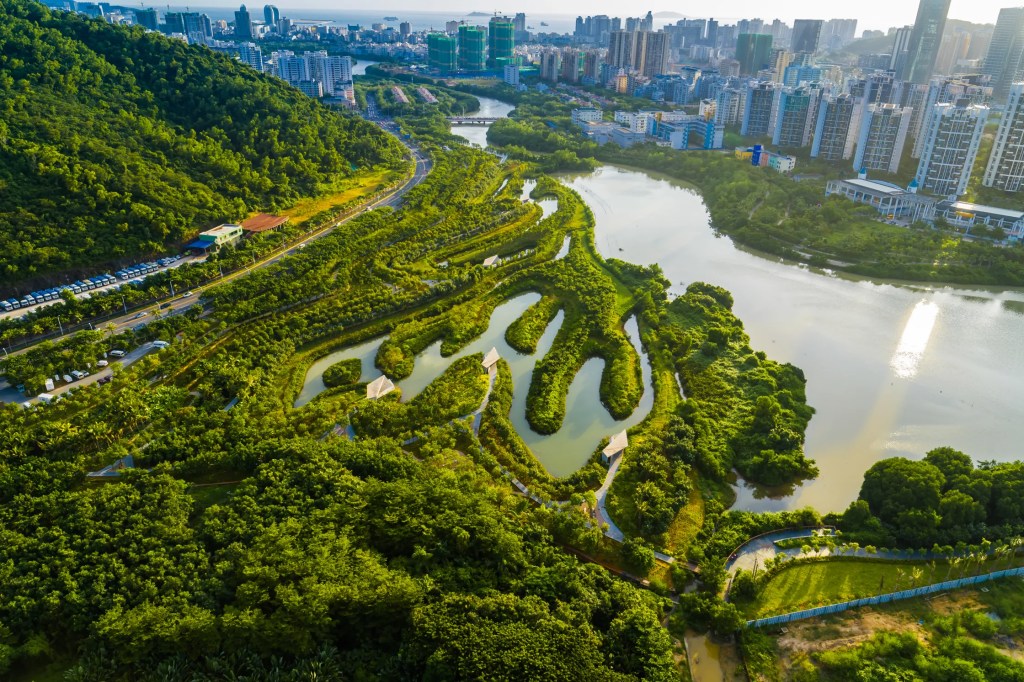
    [Featured Image from:  https://www.wired.com/story/the-designer-whos-trying-to-transform-your-city-into-a-sponge/    Credited Image as:  “Sanya Mangrove Park is just one of many “sponge” projects in China, a way to work with water instead of fighting it. COURTESY OF THE CULTURAL LANDSCAPE FOUNDATION”]

    In 2015, the United Nations (UN) came together to create 17 Sustainable Development Goals (SDG) with a goal of attaining peace and prosperity for the people and the planet through partnership by 2030 (see:  https://sdgs.un.org/2030agenda).  

    In 2025, the UN reviewed our progress toward these goals and where we have fallen short. They state, “Only 35 per cent of SDG targets with available trend data are on track or show moderate progress. Nearly half are moving too slowly or making only marginal progress, while 18 per cent have regressed.” (UN stats.UN.org Key Messages).

    Climate change is Goal 13: Climate Action and a product of areas in which we, as a globe, have fallen short. It actually touches on several, if not all of the SDGs. For example, climate change affects peoples health and well being, food production (poverty, hunger), and access to clean water due to drought, and flooding. See this wonderful chart below from Nature that illustrates the complex relationships.
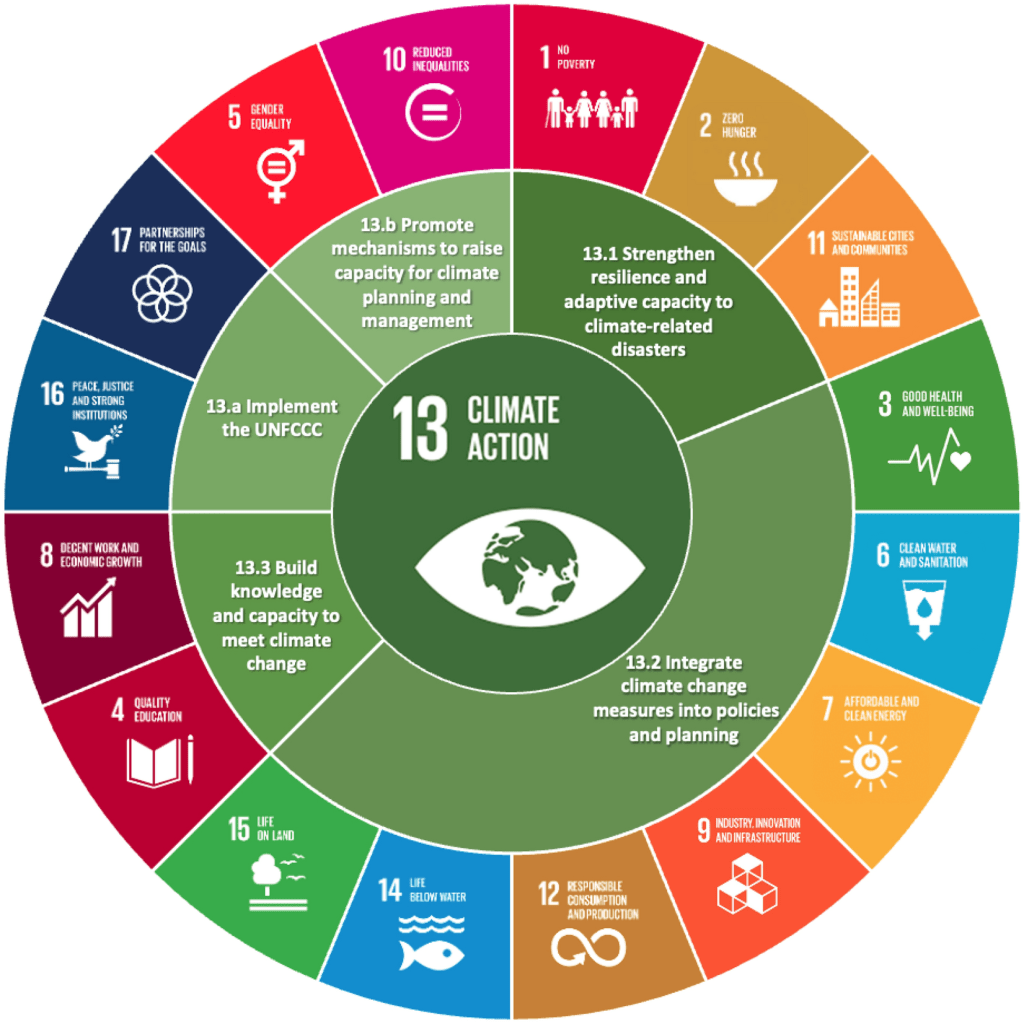
    Nature

    Flooding can come from many sources, such as: rising waters; droughts which make the land less able to absorb the water and more likely to run off; and urban development which often replaces nature and covers permeable surfaces.

    Impermeable surfaces increase water run-off and if black asphalt, also increase surface heat which further impacts climate and people. The heat from large roadways can stop incoming clouds from moving on and encourage them to dump large amounts of water on commuters, increasing accidents while depriving neighboring communities from much needed rain.

    Ways in which to combat these issues are being utilized in some areas of the world. A good example is one of by my faves – Not Just Bikes blog  The Best-Designed Town in the Netherlands (and therefore, the world). 

    Trees are wonderful for providing shade to reduce heat (and release moisture and clean air) but also their roots can absorb excess water and make the area around them more permeable.  Additionally, the cooler temperatures they help create, keep people healthier than extreme temperatures, and they also help people to be more productive. 

    The optimal temperature for human cognition is between 68-72 degrees Fahrenheit or 20-22.22 degrees Celsius. People are literally more productive; can think more clearly so they do a better job; and are happier (less prone to anger and better able to cope with their problems) in the presence of trees, greenery, and cooler temperatures (Jones, L., 2007. A Theoretical Framework of a Bionomic Approach to Improve Individual and Organizational Outcomes).

    The olfactory (smell/odor) component of nature has been found to have several benefits to human health and well-being. Some odors have been found to reduce depression and fatigue and others increase relaxation and improve sleep. Some studies have used natural scents to increase productivity, cognition, and performance under stressful conditions (Washburn, Jones, et al., 2003).

    So, what can we do? Well, the US, which the UN currently ranks 193rd in support of UN’s missions to protect against climate change. As a matter of fact, “190 of the 193 UN Member States have participated in the Voluntary National Review (VNR) process, presenting their national plans and priorities for sustainable development. Only three countries have not participated: Haiti, Myanmar, and the United States (U.S.).” (The Sustainable Development Solutions NetworkA Decade After Their Adoption at the UN, the World Remains Highly Committed to the Sustainable Development Goals, 2025).

    China, has an extensive history of designing their cities (a very long time ago) to work with nature, rather than against it. They have taken these past lessons and modern knowledge to pilot over 30 major Sponge City projects, with 600 more cities signed up to become Sponge Cities in the future!  Vox did a very nice video on “How China is designing flood-resistant cities” which you can find on YouTube.  It is excellent!
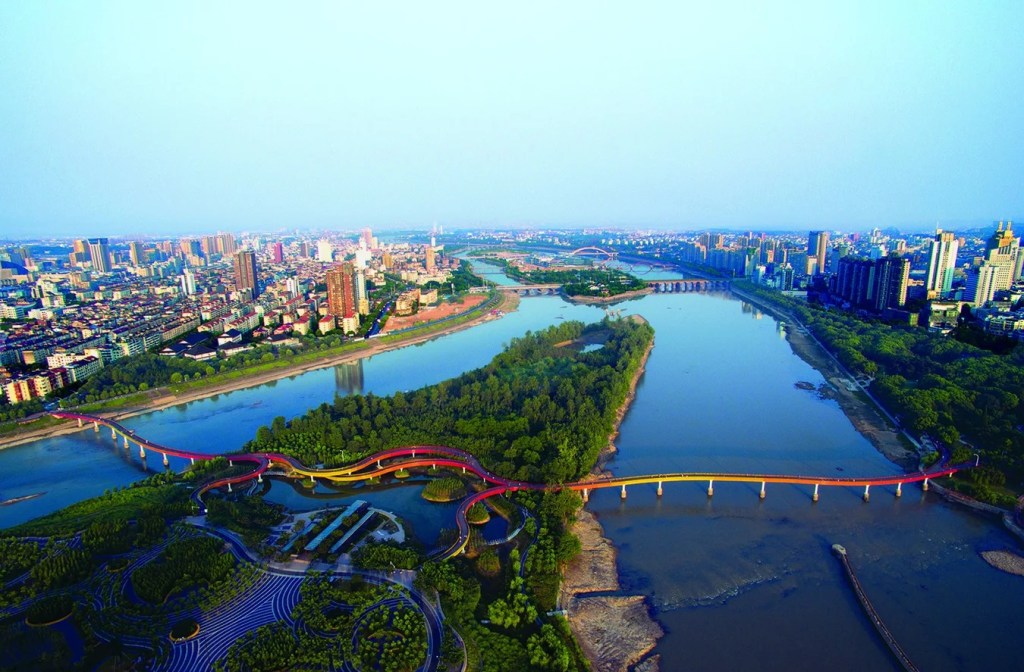
    [Scientific American: “Yanweizhou Park (center) absorbed high river water during a heavy monsoon, protecting Jinhua, China, from flooding.” Photo credit: “Turenscape”  in their article “Sponge Cities Can Limit Urban Floods and Droughts”]

    The term “Sponge City” seems to have originated in China. Sponge Cities are designed to use nature to control water. See the picture above – this is one of China’s Sponge Cities. And that beautiful red and yellow bridge is a pedestrian only bridge!

    China and the Netherlands provide us with beautiful examples of how to work with nature to prevent flooding while also providing opportunities for people to socialize and immerse themselves in all the benefits of nature – mental health, physical health, and social opportunities (unlike car-centric cities).  These designs are beautiful and beneficial for people and the planet!

    The World Economic Forum has a wonderful page that talks about “What are ‘sponge cities’ and how can they prevent floods?“ And a video you can see here. They briefly explain how they create gardens, wetlands, and permeable surfaces to allow water to be absorbed and even stored in underground tanks to prevent flooding, protect health and clean water, and release stored water when needed later in the year.

    Countries all around the world are implementing Sponge City designs into their own cities. Singapore and the Netherlands have been working with nature to combat climate change and flooding for a long time. Despite the lack of government support, the United States has pockets of projects in cities like Portland and New York, who have been using rain gardens, green roofs, bioswales and permeable pavements to mimic natural hydrology and reduce flood risks. For example, Philadelphia has a Green Cities Clean Waters program in conjunction with the Philadelphia Water Department. Unfortunately, America is very far behind the rest of the developed world in large scale efforts to improve sustainable transport and combat clime change.

    Nevertheless, we can all try to do our part by letting people know what the possibilities are and find out where your community development plans are designed and get involved. From personal projects to community projects, every little bit towards a sustainable future helps.

  • Combating Climate Change: Bike Libraries

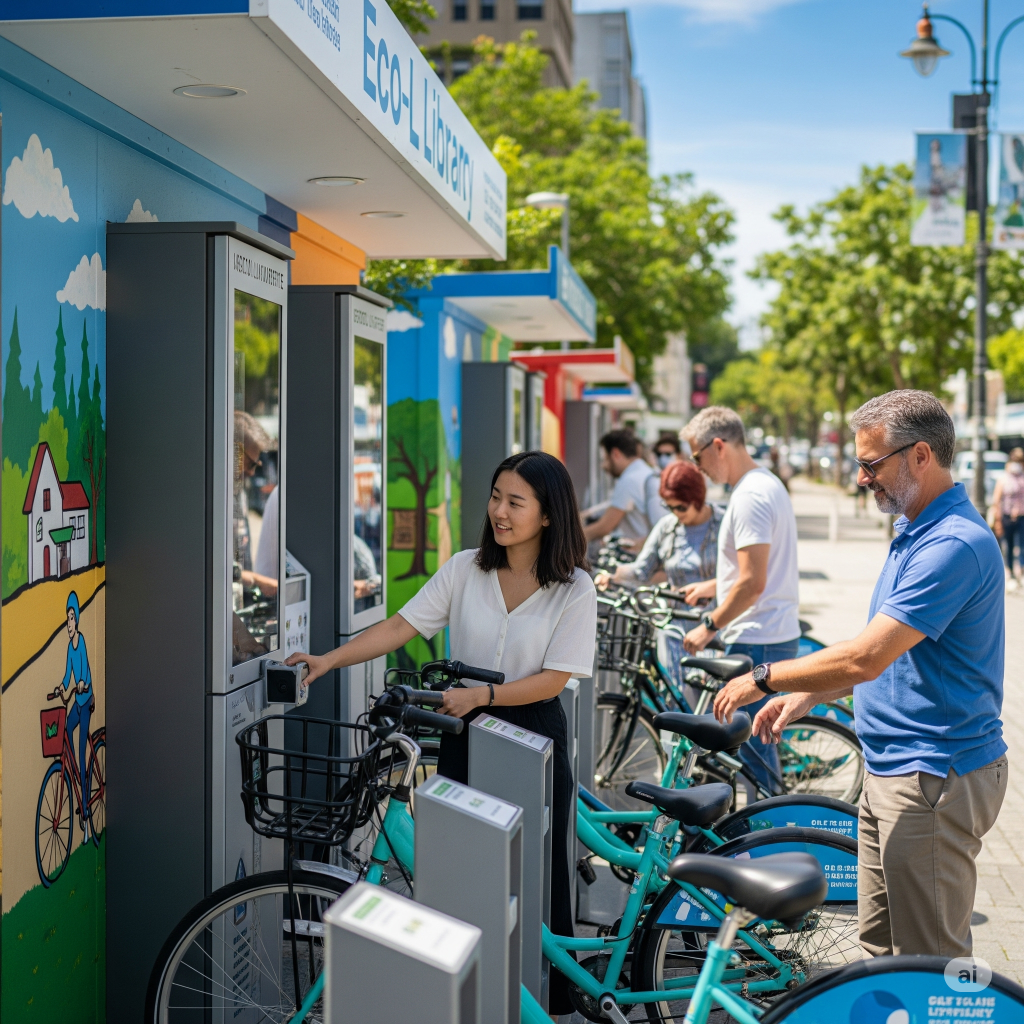
    A bike library — have you heard of one? It’s just like borrowing a book from a library, but instead, you check out a bicycle. It’s a “try before you buy” step that helps people ease into biking instead of driving everywhere.

    Bike libraries are a smart way to get more people on bikes — improving commutes, boosting health, and increasing happiness in the process. As more people choose biking over cars, communities are encouraged to invest in better bike infrastructure. That means fewer emissions, more green bike paths, and neighborhoods that feel more welcoming and people-friendly instead of car-centric.

    The world I imagine is a mix between the Netherlands and Singapore. Singapore calls itself a “city within a garden,” and the Netherlands is famous for its commitment to biking and greenery over cars and pollution.

    At the heart of both countries’ approaches is a focus on their citizens’ health and happiness. And underneath that? Economic well-being. Countries that put people before cars also become destinations — places people want to visit and live in. That’s good for tourism, property values, local businesses, and even healthcare systems, thanks to healthier, more active populations.

    There’s also something beautiful about the social side of biking. When people are on bikes or walking, they’re more likely to pop into shops or cafés, or smile and chat with neighbors and strangers alike. A simple hello or a nod can do wonders for your mood — a small human connection that cars often isolate us from.

    I think I’m going to look more into these bike libraries. Maybe you can check if your city has one, or even see if your community could benefit from starting one. It might be a small step — or pedal — toward a healthier, greener future.

  • Combating Climate Change:  Politics & Policy

    My mom always told me never to talk about politics or religion in mixed company. But if you want to combat climate change, you must consider politics. Government policies, programs, and departments control large movements in favor or against the environment. Last week we looked at several countries who have taken on climate change by preserving their natural areas, protecting biodiversity, and making sure their natural resources are unpolluted. 

    Even departments that you think are set up to protect the environment are only a representative of the larger governments.  For example, The Florida Environmental Protection Agency under Governor Ron DeSantis has decided to take lands that were set aside to protect the natural biodiversity, such as mangroves and sea turtle nesting grounds, and develop them into commercial places. See How You Can Help Protect Nine Florida Parks from Proposed Development 

    Supporting government representatives that believe in climate change is the minimum requirement. The League of Conservation Voters is a good resource.  They can help you make good political choices and show you how you can get involved to make yourself a means to combating climate change. 

    Supporting groups that may have sway in getting laws passed to protect the environment, is another wayThe Environmental Defense Fund  is one such organization that has been fighting through the courts to defend environmental laws, “protect human health, safety, and a sustainable environment”  (edf.org/legal)

    Finally, supporting organizations that have novel plans to move forward and make changes for combating climate change is next. The Nature Conservancy is an organization that educates and actively buys lands to protect. They combat climate change directly through purchasing and protecting nature. They have a wonderful video that explains their process as  A Natural Solution to Climate Change .  They state, that “by protecting natural habitats and carefully managing farmland and forests, we can store billions of tons of this living carbon.” In their video, they also mention how mangroves, like the ones that the Florida EPA are threatening, remove 5 times more carbon from the atmosphere than trees on land.  

    The Nature Conservancy of Canada (NCC) has saved “over 15 million hectares of ecologically significant land” across Canada.  They call it permanent land conservation! I love it! They have partnered with the Canadian government “through the Natural Areas Conservation Program and now through the Natural Heritage Conservation Program” (NCC: Government) to protect Canada’s landscapes. They look for Nature Based Solutions to combat “biodiversity loss and climate change.” Ecosystem restoration is a critical next step, following the conservation effort and the NCC has conserved habitat for at least 236 at risk species in Canada, so far!

    We can start small by supporting good organizations and spending our money on things that don’t harm the environment, such as, organic groceries, glass instead of plastic, biodegradable and non-toxic products. These items touch every part of our lives. The Environmental Working Group (EWG) is a great resource for examining the ingredients of many such items. They even have “EWG’s quick tips for reducing your diet’s climate footprint”. They recommend reducing or eliminating pesticides on your food by buying organic and how supporting farming and agriculture practices that are sustainable can combat climate change. They talk about alternatives to meat and dairy to both improve human health and combat climate change, by reducing greenhouse gas emissions.  Also, how we can push (or vote) for regulations that assure us clean food, air, and water. They want to help farmers learn sustainable practices and help people make safer and healthier choices for themselves and the world.

    So, through educated choices we can put our support, energy, and what money we can, behind good people and good organizations that are willing and able to make good changes for our future. Combating climate change is a global effort that starts at the individual and community level and goes all the way up to the government and the globe. Our little choices can make a big impact!

  • Combating Climate Change:  Vacations

    Last week, we discussed Japanese Forest Bathing, called Shinrin-yoku, described in Florence Williams’ book “The Nature Fix: Why Nature Makes Us Happier, Healthier, and More Creative” (2017). Well, she goes on to talk about how South Korea is trying to achieve the same thing as Japan. They call it salim yok. Having learned from Japan’s findings and conducting their own research, the Korean Forest Agency is collecting data and comparing results between healing forests. At the time she visited them, there were three healing forests and 65 more in the works. They cite research that the forests, including the soil, lower blood pressure, reduce stress, have antiviral qualities, and anti-carcinogenic qualities. 

    This brings me to the concept of ecotourism. By using our free time and money to support those countries which are trying to preserve their environment and to educate others on the importance of combating climate change in whatever small ways we can.

    To see a nice guide to Forest Bathing in South Korea, check out Culture Trip. It’s a wonderful site that breaks down the features of each of their forests, now many more than three. What you’ll also find is the amazing development of biodiversity. When Williams (2017) wrote about Korea’s new undertaking, she discussed the lack of biodiversity in some forests and how the most diverse area was the Demilitarized Zone between South and North Korea. But now, it appears they have made biodiversity a focus and done an incredible job! Here is an excerpt from the CultureTrip.com site:

    Seoul Grand Park (서울대공원)

    Nestled in the natural forest of Cheonggyesan Mountain, Seoul Zoo’s Forest Bathing Park boasts some 470 species of vegetation, including pine trees, wild pear trees, Mongolian oak trees and ginger plants as well as raccoons, rabbits, owls and pheasants. It is made up of four courses, and each offers a variety of themed walking paths, which can take anywhere from one to three hours to complete. One course includes a walkway in which forest bathers can walk barefoot on the forest’s yellow soil, while taking in views of Gwanaksan Mountain and listening to the sounds of chirping insects. It doesn’t get more natural than that.

    When thinking about how different countries are taking an interest in combating climate change, Sweden comes to mind. Sweden has always been presented as the place that does it right. Not just climate change initiative but everything. If you go to Visit Sweden site it states that, “Sweden was the second country in the world to introduce an eco tourism charter. The Swedish eco certificate Nature’s Best will guide you to the best eco tourism experiences and accommodations in our beautiful country.”  (visitsweden.com) This is a beautiful site that I highly recommend you take a look at. Especially, if you are thinking about where to go on your next vacation. 

    So what’s that about Australia? Ecotourism Australia is a non-profit that supports ecotourism in Australia.  They have a lovely website which contains a Green Guide to eco experiences and a map. They rate hotels on eco features. It’s a really nice place to start planning an eco trip.  I also found Australia.com site which lists some of their favorite eco friendly destinations or Sustainable travel spots.

    No matter your travel plans for summer or winter, vacation choices can be another way to combat climate change. Now don’t get me wrong – airplanes are NOT eco friendly and there are some serious videos on that from the BBC. There is a BBC report about Costa Rica’s amazing ecotourism but the reporter brings up the question of how all the visitors must arrive by plane and that planes are a terrible polluters (BBC video). Nevertheless, Costa Rica has done a wonderful job at preserving their forests, protecting the green sea turtle population, and educating their visitors. And if you would like to go, National Geographic has some wonderful travel guides about Costa Rica and some other eco-friendly destinations (nationalgeographiccosta-rica ).

    As far as planes go, and let’s admit it, most of us are flying to our vacation destination whether we like it or not. According to Chemical and Engineering News, airplanes want to be more sustainable. (CEN).  They apparently create “about 3% of global carbon dioxide emissions, and it is one of the fastest-growing sources of greenhouse gases, according to the International Council on Clean Transportation” (CEN).  The International Council on Clean Transportation states that “Carbon emissions from commercial flight are set to triple by 2050 amid surging travel and freight demand. Nonetheless, emissions could be slashed by 85% through demand management, advances in efficiency technologies, and expanded use of biofuels.  ICCT shows how to design pragmatic policies using research on aircraft technology, fuel efficiency, and alternative fuels.” (theICCT.org).  

    The airline industry is “committed to achieving net-zero carbon emissions by 2050” according to AFAR.com. Through the use of “sustainable aviation fuel—jet fuel produced from sustainable sources such as plant oils, municipal waste, and agricultural residue that generates up to 80 percent fewer carbon emissions than conventional fossil fuel–based jet fuel. The commitment is coupled with the goal of making 2 billion gallons of sustainable aviation fuel available to U.S. carriers by 2030”(afar.com).  For more on sustainable aviation fuels, see the Environmental Energy and Study Institute’s (ESSI) site here and to for more on Airlines for America’s sustainability plans look here .

    So, hope is on the horizon! And we can do our part to combat climate change by supporting those countries, governments, communities, airlines, and travel companies that are doing their part to combat climate change on our next vacation. We can research eco-friendly destinations, book flights with airlines committed to biofuels, and pack light to reduce airplane fuel consumption. Carbon offsetting and slow travel are also ways to minimize the environmental impact of travel while  benefitting the environment and the local communities that you visit. Bon Voyage!

  • Combating Climate Change: Forest Bathing

    The National Horticulture Society (NHS) Chelsey Flower Show 2024 winner for Best Show Garden was the Forest Bathing garden.  Forest Bathing is an ancient Japanese practice called Shinrin-yoku which basically means “bathing in the forest atmosphere and reconnecting with nature through our senses”  (rhs.org.uk).   The garden was designed by Ula Maria for the Muscular Dystrophy Association of the UK “to awaken imagination and innate connection to nature by bridging a gap between us and the natural world” and will be moved to provide “a place of refuge to patients, their families, and clinicians at the time of diagnosis and beyond.“ (rhs.org.uk).  

    The use of nature as a coping mechanism is something that I talk about in my paper, “A Theoretical Framework of a Bionomic Approach to Improve Individual and Organizational Outcomes” (I know, catchy title).” You can read it here. Nature has historically been an under appreciated and therefore, underutilized coping mechanism. We have finally started to see a more widespread appreciation for nature as a coping mechanism, especially since the pandemic when many people turned to nature to improve the mood, physical health, mental health, and well-being.

    Forest bathing is a multimodal sensory experience & coping mechanism.

    Take a moment to appreciate your surroundings and listen to the sounds around you: twittering birds, rustling bush, trickling streams. Breathe in clean, fragrant air and soak in the sights of the textured ground and the shapes of the leaves in the sky. Touch the soft, green moss carpeting the shaded stones, or the rough bark on the trees. Let the stillness around you influence your state of mind and make you forget the constant motion of the city. This is a sensory experience”  (japan.travel).  

    “Even Japanese doctors promote forest bathing as a relaxing break from hectic urban life” (japan.travel). 

    The many health benefits of forest bathing”

    “Forest bathing has become a vital part of preventative healthcare in Japan. The results of Japanese studies have shown forest bathing improves sleep quality, mood, ability to focus, and stress levels. Chronic stress can contribute to the development of ailments like anxiety, depression, and insomnia, to name a few. It can also contribute to physiological problems, like high blood pressure, muscle tension, and lowered immune response. Spending time in nature, away from modern technology and big cities can improve your physical and mental health by reducing the effects of stress on your body. Prescribed forest bathing in Japan has led to a healthier lifestyle for people of all ages.” (japan.travel)

    Forest bathing is described in the book “The Nature Fix: Why Nature Makes Us Happier, Healthier, and More Creative” by Florence Williams (2017). She describes a depression that fell over her with a move from a nature filled location to a more urban one. So, she explored “the science behind nature’s positive effects on the brain” (Williams, 2017, back-cover). The book is a wonderful introduction to the research and a nice guide to get started reaping the benefits of nature.  She speaks with many of the heavy hitters working in the field while visiting some beautiful locations.  

    Williams (2017) explains how the Japanese Forestry Agency has invested in research and is designating one hundred forest therapy sites throughout the country, utilizing “68% of the country’s landmass”.  This is a great idea for all countries to follow. It is both beneficial to people and a way to combat climate change through preservation of forests.  It may also be a way to monetize forests.  Working in conjunction with doctors, people can become educated to appreciate the relationship between nature and human health and happiness.  Educating people about the benefits of conservation of wild places to combat climate change by reducing carbon, cleaning the air, reducing flooding, cooling the air, providing shelter for biodiversity, and understanding the specific benefits of certain natural features. 

    Williams (2017) goes on to describe several studies that have found time in nature reduces stress and blood pressure and improves the immune system. Specifically, certain experiences increase the production of NK cells which kill cancer cells. To read more on K-cells and NK cells see:  pubmed.ncbi.nlm.nih.gov. Williams (2017) talks to Qing Li “an immunologist in the department of environmental medicine at Nippon Medical School in Tokyo” who hypothesizes that our immune response is related to our body’s response to smelling turpenes, pinenes, limonenes and even soil bacterium which increase the production of NK cells. He apparently uses cypress oil in a humidifier at home, ever since his findings.

    Government funding of research into the benefits of this free resource, nature, and then using nature to support the health and happiness of its citizens is a great idea. When I wrote “A Theoretical Framework of a Bionomics Approach to Improve Individual and Organizational Outcomes” (I know, catchy title), I looked at different disciplines’ research and different countries’ perspectives and policies on the topic of nature. You can read that article below in the post, “Ecopsychology and Bionomics” or go straight to the link here.  

    Some cultures have a strong respect for nature and the beneficial effects on people. Some governments have years of scientific research on the beneficial effects of nature on society. And several disciplines have research from their perspectives further documenting the beneficial effects of nature on health and happiness. We should support governments that promote and utilize this information. It will benefit people who will benefit communities and societies which will benefit the earth – which in turn will benefit people again. It’s circular and benefits everyone and everything in the end. Through mere appreciation and protection of these resources –  what an easy way to combat climate change.

  • Combating Climate Change: Energy and Transportation

    Last week we talked about the impact of gardens and how the National Horticultural Society (NHS) stated that if just half the population of the UK (approx. 30 million people) planted a tree and nurtured it to full grown, it would “store the carbon equivalent to driving around the planet 11.4 million times! .”  “By adding more carbon dioxide to the atmosphere, people are supercharging the natural greenhouse effect, causing global temperature to rise”. For more information on Global Temperature see: understanding climate change.  So, what else can we do to combat climate change? Let’s look more at energy and transportation.

    The United Nations (UN) has “Actions for a Healthy Planet”. They point out that the United States produces double the world average of greenhouse gas emissions per capita. So, while developers and architects work on creating Living Places with Living Buildings engulfed in greenery/biophilic design and entire cities where everyone is able to commute by bike or walk, like can be found in the Netherlands – maybe if the rest of us can do our part to make a difference.  Just like the NHS’s example, even small changes can add up to make a big impact.

    Where to start? Well, the UN suggests that we can change our utility source from oil and gas to solar or wind. Check with your utility company for a renewable source plan. Even in Florida, which has a pretty anti-progressive reputation, there is the FPL Solar Together program. Or you can get your own energy panels and sell the extra energy back to the grid – eventually making up for the upfront cost of the panels. There are also home windmills or turbines that you can put on your rooftop or in your yard or garden. These both may be future options because they require a high initial investment and may not be useful to all areas due to wind or sun limitations.

    The UN also suggests reducing home energy consumption with LED lights, energy efficient appliances, using cold water for laundry, and hanging clothes instead of using the dryer.  You can also take steps such as, unplugging electronics and taking shorter or cooler showers. For example, Mitsubishi Mini-splits tout “no greenhouse gas emissions”, also “160-390% more efficient” and  “reduce electricity use by 65%”. Furthermore, some changes can earn you some tax credits with the Inflation Reduction Act in the US.  And in Canada, they provide The Canada Greener Homes Grants to homeowners for energy efficient renovations such as home insulation, windows, doors, heat pumps, and renewable energy systems.

    As far as transportation solutions, I always dream of living somewhere that I can walk, bike, or take public transportation and one day I hope to move to one of those beautiful places but for now I live in a place that most people would just drop dead in the heat trying to get from one place to another. So, I have an electric car which I plug into my house where I am part of the power company’s solar program. Some other more universally achievable solutions may be carpooling, planning fewer trips, and combining errands.  Also, we can actively encourage our city governments, towns, and neighborhoods to plant more trees and to encourage biophilic Living Buildings/Places architecture and remodeling.  That would create more shade with plants that clean and cool the air, streets, sidewalks, and bike paths while capturing carbon.  Then we could walk and bike more to combat climate change.

    Does anyone have examples of success stories? Any examples of towns that have been transformed by a community project to combat climate change? For example, the nations oldest town of Saint Augustine, Florida is getting rid of some of it’s black tar streets and replacing them with brick streets which don’t get as hot in the sun and the water can pass through to go back to the water table. Uncemented brick also reduces runoff and flooding and can be used for driveways and sidewalks, as well. The city is also planning on planting more trees along pedestrian walkways and streets. Flooding is a very big problem in the city. Hurricanes and flooding used to occur far less frequently but climate change has increased major weather events considerably. (As I sit here writing this, a hurricane is passing by). The city seems to be falling short of creating designated bike lanes. They did have bike share program but it went bankrupt.  Car parking is encouraged to stay in the periphery of the city.  People are being provided with free public buses that circle the city and even take people out to the beaches and back. The reduction in automotive traffic in town will reduce pollution and parking all along the streets which is ugly and inhibits pedestrian ways. Feel free to share any positive projects!

    A Call to Action! Well, I hope everyone will implement some of these tips and just think about some of the things you are already doing! That’s terrific! Also, take some time to research your local initiatives. Maybe volunteer or just spread the word and give support to those who are Combating Climate Change!  Let’s all work together toward a more sustainable future that is more comfortable and welcoming for all living things!

  • Combating Climate Change: Gardens

    Let’s talk gardens and greenery – plants on human health and well-being. During the pandemic, a lot of people realized how important the outdoors was to them. They took pleasure in an outdoor walk, they started bringing plants into their homes and once allowed, they started driving to parks and outdoor spaces to feel better. There were amazing videos of nature coming back into places it had been pushed out of by humans. Some animal behavior that we thought we understood, turned out to be completely wrong because they were only behaving that way in the presence, or interference, by humans. To see an amazing documentary on it (if you haven’t already) find “The Year Earth Changed” on Apple TV+.  See the trailer.

    Another great example of a newfound understanding of the important relationship between nature and human health, well-being, and one country’s attempt to combat climate change is Britain’s the Royal Horticulture Society (RHS) and their RHS Chelsey Flower Show (on BBC). When the Covid-19 Pandemic hit, they had to cancel the 2020 show for the first time in 108 years. But when it came back, people had a whole new appreciation for nature on people’s health. Over the following years, they banned floral foam, plastic, peat, and artificial grass from all future shows, they added indoor plant exhibits and balcony exhibits because during the pandemic they had a huge uptick in people’s interest in plants and green spaces. It was found to be a coping mechanism for many people and helped to combat loneliness,  depression, and even obesity! See the RHS Sustainability Strategy  

    In 2021, they launched the  Planet-Friendly Gardening Campaign  to help make the UK more biodiverse, combat climate change, and tackle social issues like mental health, community engagement, and physiological health. Apparently, half of all Brits do some form of gardening and they state, that if everyone planted one tree and nurtured it to full grown it would “store the carbon equivalent to driving around the planet 11.4 million times!”

    It’s a pretty impressive goal. And I think, it’s one that every country could replicate. This year’s Chelsey Flower Show had several examples of people growing a tree inside their homes and on tiny little balconies! It was beautiful and doable for anyone! I know just nurturing my little orchid and propagating my Blue Salvia in my kitchen, makes me happier – even when it’s 100 degrees outside. Proof it is doable anywhere.

    The science behind the benefits of nature on human health and well-being has been growing and the alignment of nurturing nature, reducing nasty plastics and chemicals from our environments, and not using up resources to combat climate change, is cyclical. It’s important and it’s inevitable – if we want to go on, on this planet. Together. Happy. Healthy. Tell someone you know to plant a tree and nurture it until it’s full grown.

  • Combating Climate Change:  Living Places, Bringing Nature Inside & Vertical Gardens in Urban Spaces

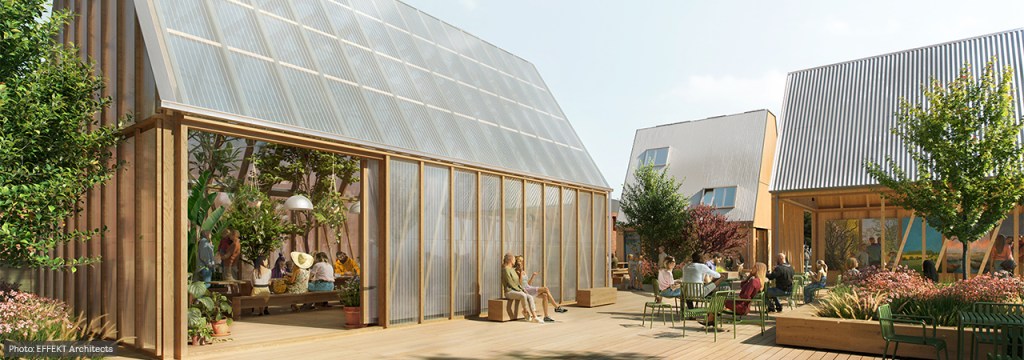
    Living Places is a Danish concept similar to the Living Buildings project I spoke about last week but for housing. Check out their video: https://youtu.be/QuOHasMZTvA?si=XQRWZIqbn4ZqrJ0W  It’s such a wonderful concept! I would love to find a neighborhood like this in a village that is walkable and bike friendly.  Denmark definitely has a beautiful climate, walkable neighborhoods, and bike friendly cities.  I see why they keep ranking as happiest people on earth. The Living Places project has “3-times lower CO2 footprint and a 3-times better indoor climate by Danish standards, all while enhancing the health and well-being of residents – and at a competitive price!” (Velux.com) That last part is pretty important because most of the Living Building examples I’ve found are in the millions and we are never going to combat climate change if we don’t make changes for the majority of people. Also these structures are supposed to be able to be taken apart and reused in the future – recycling the house!

    Compare that to one of the older Living Building projects, built in 2013, called the Bullitt Center (https://bullittcenter.org) in Seattle Washington. They say that the building was the first of its kind, a totally self-reliant Living Building that is supposed to last 250 years.  At the cost of $32.5 million dollars, including land, the 52,000 square foot living building has proven net-zero architecture is possible – although still not commonplace and therefore, extremely expensive. The cost of maintenance for all the water and waste filters and engineering could be financially prohibitive, as well.  Find the project at a glance here:  https://bullittcenter.org/wp-content/uploads/2015/03/Bullitt-Center-Financial-Case-Study-FINAL.pdf).  As a matter of fact, it took them over 2 years to find all the products they needed in order to not have any Red List chemicals in them (https://gba.org/resources/green-building-methods/interior-solutions/product-and-building-materials-red-list/). Although they did end up having to use chlorine in the water to reduce the chance of bacteria buildup in the pipes.

    I love that the structure was to micmic the forest that was there before the city – using the sun and water to sustain itself and still replenish the land. They used local timber for the stairs and ceiling, large windows for natural light and breezes, and even man-made wetlands along the edge of the upper level of the building and on the ground around the building to recycle the grey water produced. They also only provide bicycle parking, rather than cars, to promote gas free transportation.

    Nevertheless, it didn’t exactly scream nature. Although an excellent example of a Living Building, if someone didn’t tell me that this was a Living Building, I’m not sure I would have taken notice of it in the cityscape but it is amazing in what it accomplishes. It collects all it’s own water, produces an extra 30% of energy from it’s solar panels annually, and the toilets produce what they call, black water which is recycled locally to produce compost which is then sold.  

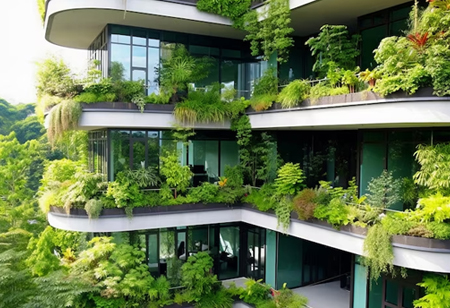
    Though I still crave a bit more natural elements. The BBC article, “12 Stunning Buildings That Bring Nature Inside” (April 20, 2024) had several examples of that. See the article with pictures here: (https://www.bbc.com/culture/article/20240420-12-stunning-buildings-that-bring-nature-inside ). These may or may not be Living Buildings but they definitely exemplify biophilic design. There are a couple of buildings from Ho Chi Minh City that look like verticals gardens. They talk about how the structures cool the air and create vertical food production and even a microclimate! Crazy!

    They show the, Shiroiya Hotel in Japan which is designed to be an open garden with plants and natural light coming into what used to be a regular building (https://www.shiroiya.com/en/ ). Then the exterior looks like it’s coming out of a hillside, which they created. That section is called The Green Tower and looks like a green hill with paths, windows, and doors sticking out of it, in the middle of the city. They hope that this will draw people in from around the city to enjoy nature and calm the mind.

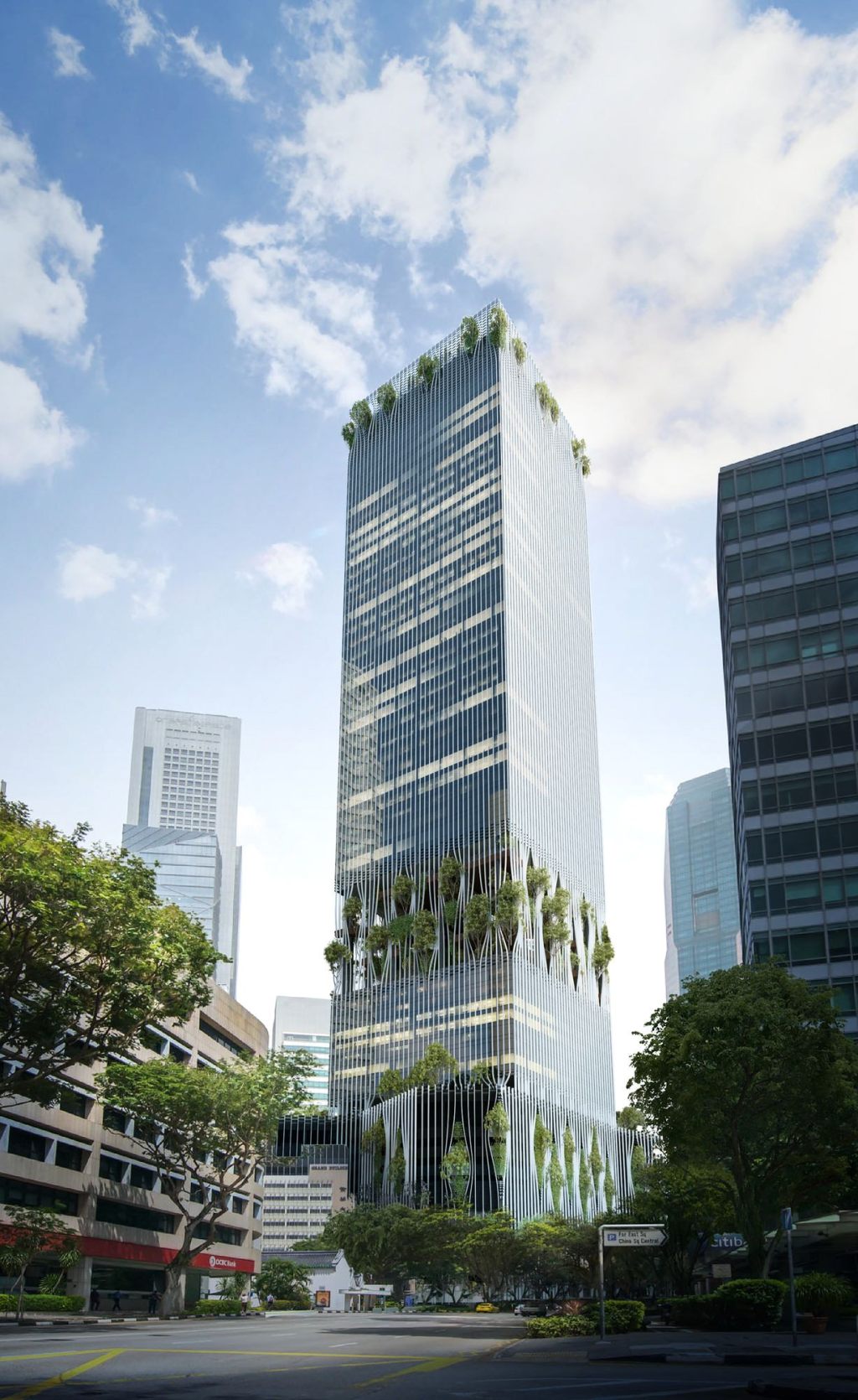
    There is also the CapitaSpring tower in Singapore with an urban farm on the top and gardens throughout the building (https://capitaspringoffice.com ). Parts of the building look like the building is opening up and plants are coming out of it. You can see a tour of the garden here: https://youtu.be/r9OJSHnRWq0?si=fgsa974re9Edygw9  

    It’s all so exciting, how many amazing projects are going on all around the world. It’s great to see what can be done and is being done to Combat Climate Change by changing the way we think about our surroundings. Please feel free to share any great projects that you find!

  • Combating Climate Change: Biophilic Design, Living Buildings, Gardens, and Transportation

    Climate Change and Environmental psychology: How do we get people to interact with the natural world? And how do we get people to think differently about how they interact with the world?

    I have been interested in these questions for a long time. Then I came across The International Living Future Institute. Perfection! This is it! This is what I’ve been looking for – the crossing of human health, well-being, happiness and the natural environment in a built environment world.

    The Institute has a challenge – The Living Building Challenge! “What if every single act of design and construction made the world a better place?”. Yes! Exactly! And to clarify, a living building is a building that doesn’t use any nasty chemicals, uses locally sourced materials to cut down on transportation fuel pollution, produces it’s own electricity, gathers it’s own water – it’s amazing.

    Then there is biophilic design which is amazing and beautiful designs you can see throughout the world that incorporates nature into the built structure. Think of Singapore’s Gardens by the Bay with its Silver Garden Super Trees. Apply this to buildings.

    Then there are cities that are trying to cut down on fuel pollution and the damage that extracting fossil fuels cause. They are promoting walkable neighborhoods, towns, and cities. They are creating bicycle paths or even better – favoring bicycle paths over cars. The Netherlands is really the leader in this area. See a You Tuber called Not Just Bikes if you want an amazing breakdown of this topic. Here is a sampling:

    I’m going to continue to explore this topic weekly and see where it leads. Feel free to join me. I will try to post something every Monday. Let me know if you have any thoughts on the topic. Maybe if enough people start thinking differently, we can make a change for the better.

  • Bionomics & Ecopsychology

    “… nature plays on our health and well-being” (Jones & Mouloua, 2006)

    A Theoretical Framework of a Bionomic Approach to Improve Individual and Organizational Outcomes.

    Over 10 years ago, I developed a theory about how we could utilize elements of the natural environment to improve individuals’ health and well-being which could then improve organizational and community outcomes. It was a multi-disciplinary approach to understanding nature which was culturally and societally under-appreciated and therefore underutilized. Some cultures were farther ahead than others and that hasn’t changed. “Nature” was not considered a serious topic by the powers that be, at the time. So, it was replaced with “bionomics” (“the comprehensive study of the relationship between a species and its environment” – ncbi.nlm.nih.gov). The theory was also applied to military personnel and presented at the Human Factors and Ergonomics Society’s 50th Annual Meeting. It was very well received and a link to the article is above.

    Since the global Covid-19 pandemic, there has been an increasing acceptance of the importance nature plays on our health and well-being. Here at Ka Pi’i Kai we will be exploring the flourishing understanding of the relationship between people and the natural environment and the impact on society.

    You can check out my Social Isolation Flower series at Ka Pi’i Kai: Visual Currents